
Check Engine Light On! 7 Common Causes and When to Worry
Here's how to read the warning- the seven most common causes our technicians at Duval Ford in Jacksonville, Florida see across makes and models, and how to know when it's time to worry.
You’re heading down I-10 when a small amber engine icon lights up on your dashboard. The car seems to drive fine, so is it safe to ignore, or should you pull over now?
The check engine light is your vehicle's way of telling you
that its onboard computer has found a problem. Every car and light truck sold
in the U.S. since 1996 has an onboard diagnostic system, known as OBD-II. It
constantly monitors the engine, the ignition, the fuel and emissions systems,
and the sensors that tie them together. When a reading falls outside its normal
range, the computer stores a diagnostic code and turns on the light.
The light itself doesn't tell you what's wrong. It could be
something as simple as a loose fuel cap or as serious as a misfire damaging
your catalytic converter.
Steady or Flashing? The First Thing to
Notice
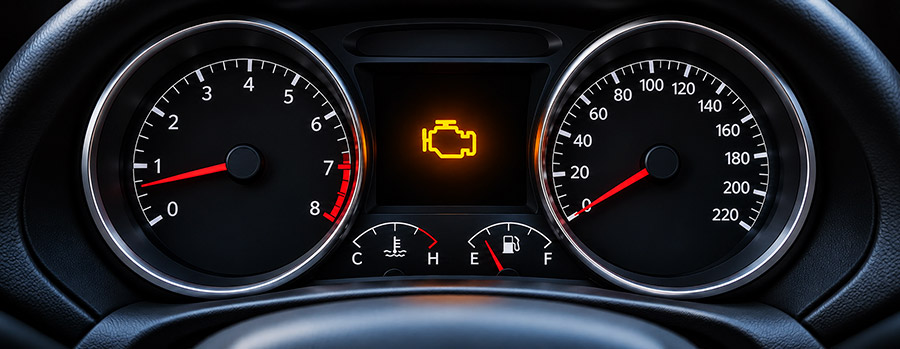
Look at how the light behaves. That tells you how urgent the
problem is.
•
Steady
light: The computer has found a fault that needs attention. Book a
diagnostic visit promptly.
•
Flashing
light: This means a severe engine misfire. Unburned fuel may be entering
the exhaust, where it can overheat and destroy the catalytic converter in a
short time. Reduce speed, avoid hard acceleration, and get the vehicle checked
right away. If the engine is shaking badly or losing power, pull over somewhere
safe and call for a tow.
Also check your other gauges and messages. A check engine
light combined with a high temperature reading, low oil pressure warning, or a
red warning message means you should stop driving as soon as it's safe.
7 Common Causes of a Check Engine Light
1. A Loose, Damaged or Missing Fuel Cap
It sounds too simple, but it's one of the most common
triggers. Your fuel system is sealed to keep gasoline vapors from escaping. If
the cap isn't tightened fully, or its seal is cracked, the evaporative
emissions (EVAP) system detects a leak and turns on the light.
Many newer vehicles use a capless fuel filler and may show a
fuel-inlet warning message instead. Make sure the fuel nozzle was fully removed
and nothing is stuck in the inlet. After you fix a loose cap, the light may
take several drive cycles to go off on its own.
2. A Failing Oxygen (O2) Sensor
Oxygen sensors measure how much unburned oxygen is in your
exhaust. The engine computer uses that reading to balance the air-fuel mixture.
Over time, sensors get coated with carbon and respond slowly.
A failing O2 sensor won't usually stop your car from
running, but it can quietly cost you fuel economy. Left alone long enough, a
rich fuel mixture can also damage the catalytic converter, turning a modest
repair into a costly one.
3. Worn Spark Plugs or Failing Ignition
Coils
Spark plugs ignite the fuel in each cylinder, and ignition
coils supply the high voltage they need. When a plug wears out or a coil
weakens, the cylinder misfires. You may notice rough idling, hesitation when
accelerating, or a stumble at highway speed.
Misfires are the most common reason for a flashing check
engine light. On turbocharged engines, worn plugs can show up as misfires under
heavy load, such as towing or merging. Replacing plugs on the schedule in your
owner's manual helps prevent this.
4. A Dirty or Faulty Mass Airflow (MAF)
Sensor
The mass airflow sensor measures how much air enters the
engine so the computer can add the right amount of fuel. Dirt, oil, or debris
on the sensor can throw off its readings. Symptoms include rough idle,
stalling, hesitation, and lower fuel economy.
A clogged or poorly fitted engine air filter is a frequent
cause of MAF contamination. Sometimes cleaning the sensor solves the problem.
In other cases it needs to be replaced.
5. Catalytic Converter Problems
Your catalytic converter turns harmful exhaust gases into
less harmful ones. Converters are built to last for many years, but they
usually fail because of another problem upstream, such as ongoing misfires or a
bad O2 sensor.
Warning signs include a rotten-egg smell from the exhaust,
sluggish acceleration, and noticeably worse fuel economy. Because a converter
is one of the more expensive parts to replace, catching the earlier problems
that damage it is worth the effort.
6. EVAP System Leaks and Purge Valve Faults
Beyond the fuel cap, the EVAP system includes hoses, a
charcoal canister, and purge and vent valves. A cracked hose or a sticking
purge valve can set a code. Some drivers notice the engine is hard to start
right after refuelling.
These problems rarely affect how your vehicle drives day to
day, but they let fuel vapors escape and won't fix themselves. A smoke test
helps our technicians find small leaks quickly.
7. Vacuum Leaks and Cracked Intake Hoses
Your engine depends on a sealed intake system. Rubber hoses
and gaskets get brittle over time, especially in Northeast Florida's heat. When
one cracks, unmeasured air enters the engine and the computer reports a
"lean" condition.
You might hear a hissing sound under the hood or notice a
high or uneven idle. Vacuum leaks are often inexpensive to repair once they're
found, which is where a proper diagnostic test helps.
When to Worry and What to Do Next
Not every check engine light means trouble, but none should
be ignored. Use this as a quick guide:
•
Pull
over and call for help if the light is flashing and the engine is shaking,
losing power, or overheating.
•
Get
it checked the same day if the light is flashing but the car still drives
normally. Keep your speed down and avoid towing or heavy loads.
•
Book
a visit if the light is steady and you notice rough idling, hesitation, or
a drop in fuel economy.
•
Check
the fuel cap first if the light came on right after you refuelled. If it persistently
stays on, schedule a diagnostic.

A steady light staying on for months is a huge risk. While
the light is on for one problem, it can't warn you about a second one. Small
issues like a weak sensor can damage more expensive parts over time.
A diagnostic code is only a starting point. A code for a
misfire in cylinder 3, for example, could point to a plug, a coil, a fuel
injector, or a vacuum leak. Replacing parts based on the code alone often
wastes money without fixing the real problem.
Get an Accurate Diagnosis at Duval Ford
The fastest way to turn off a check engine light for good is
to find out exactly why it came on. At Duval Ford, our factory-trained
technicians use advanced diagnostic equipment and manufacturer service
information. That lets them go beyond the generic code to pinpoint the cause,
whether it's a sensor, an ignition component, or a hidden leak.
When we find the problem, we'll explain what's wrong, how
urgent it is, and what it will cost before any work begins. Repairs are made
with quality parts that meet your vehicle manufacturer's specifications.
Duval Ford has served Jacksonville drivers since 1916. We
service all makes and models, so whether you drive a Ford or another brand, our
team is ready to help.
Is your check engine light on? Don't wait for a small problem to become a big one. Schedule your service appointment online or call our service department today, and let our team get you back on the road with confidence.